Understanding Cheque Bounce Cases in India#
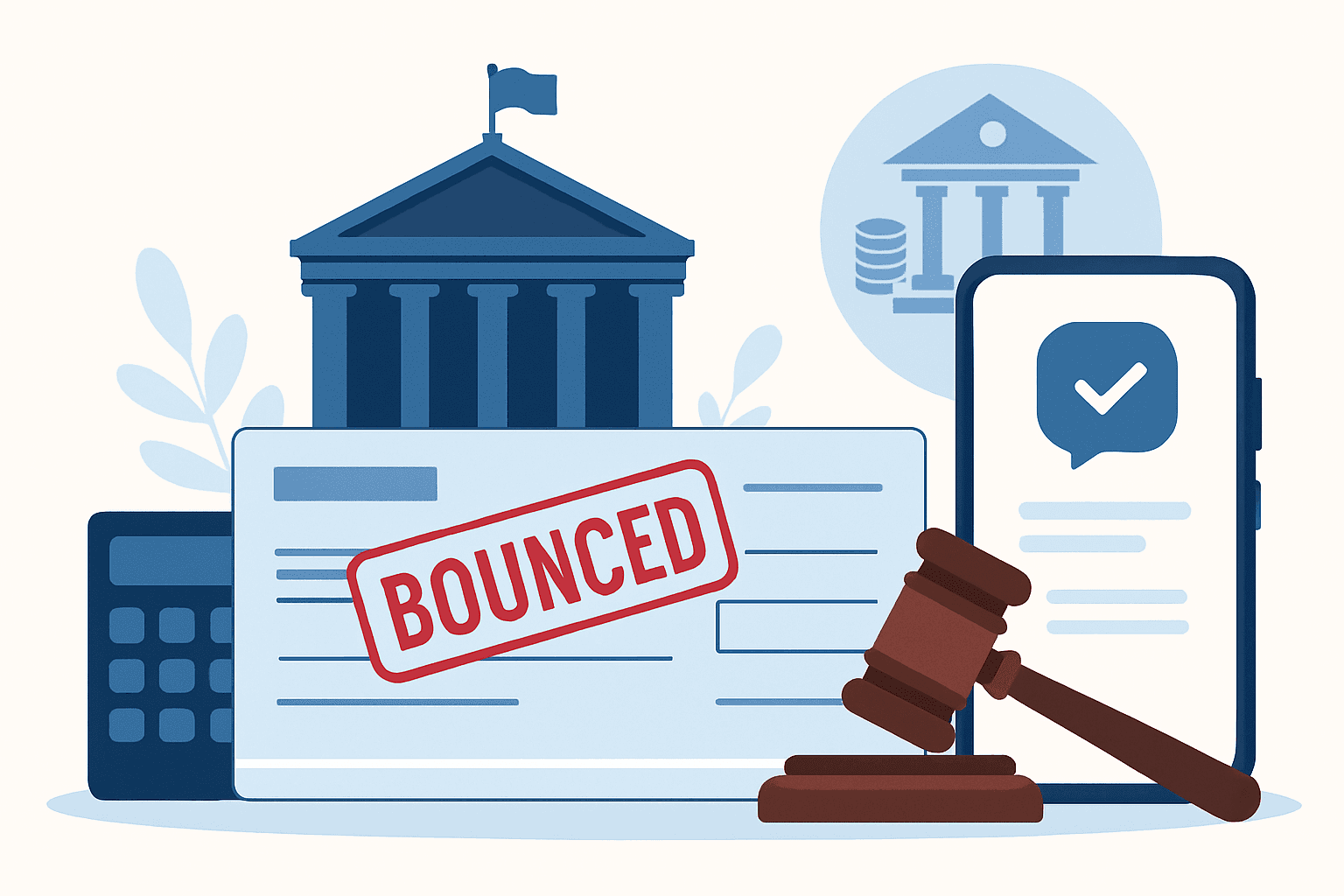
A cheque bounce case under Section 138 of the Negotiable Instruments Act, 1881 is one of the most common types of cases in Indian courts. If someone issues you a cheque that gets dishonoured by the bank, you have the legal right to file a criminal complaint. This guide covers everything you need to know about 138 NI Act cases, including how to track their status.
What is Section 138 of the NI Act?#
Section 138 makes the dishonour of a cheque a criminal offence. If a cheque is returned unpaid due to insufficient funds or if the amount exceeds the arrangement made with the bank, the person who issued the cheque (drawer) can be prosecuted.
Key Elements for a Valid 138 Case
For a cheque bounce complaint to succeed, all these conditions must be met:
- 1The cheque must be for a legally enforceable debt or liability
- 2The cheque was presented within its validity period (3 months from date of issue or the date on the cheque)
- 3The cheque was dishonoured by the bank
- 4A legal notice was sent to the drawer within 30 days of receiving the bank's memo of dishonour
- 5The drawer failed to pay within 15 days of receiving the notice
- 6The complaint was filed within 30 days of the expiry of the 15-day notice period
Step-by-Step Timeline of a Cheque Bounce Case#
| Step | Action | Time Limit |
|---|---|---|
| 1 | Cheque presented to bank and dishonoured | Within 3 months of cheque date |
| 2 | Bank issues return memo | Immediate |
| 3 | Payee sends legal notice to drawer | Within 30 days of return memo |
| 4 | Drawer receives notice | Service period (typically 1-2 weeks) |
| 5 | Drawer fails to pay | 15 days from receipt of notice |
| 6 | File complaint under Section 138 | Within 30 days after Step 5 |
| 7 | Court takes cognizance | 1-4 weeks |
| 8 | Summons issued to accused | 1-3 months |
| 9 | Trial and proceedings | 6 months - 3 years |
| 10 | Judgment | After completion of trial |
How to Track Cheque Bounce Case Status#
On eCourts
- 1Visit ecourts.gov.in
- 2Select District Courts
- 3Choose your state and district
- 4Search by:
- CNR Number — the most reliable identifier (find your CNR)
- Case Number — typically CC (Criminal Complaint) or ST (Summons Trial)
- Party Name — complainant or accused name
- 1View case status, next hearing, and order history
Via WhatsApp Alerts
Cheque bounce cases often involve many adjournments and date changes. Missing a hearing can result in a warrant being issued against the accused. Add your case to India Case Status and receive instant WhatsApp alerts for every update.
Understanding Case Statuses in 138 Cases#
| Status | What It Means |
|---|---|
| Pending — Pre-Cognizance | Complaint filed, court yet to take cognizance |
| Summons Issued | Court has directed the accused to appear |
| Accused Appeared | Accused has appeared, trial to begin |
| Evidence Stage — Complainant | Complainant presenting evidence |
| Evidence Stage — Accused | Defence presenting evidence |
| Arguments | Final arguments by both sides |
| Reserved for Judgment | Judge will pronounce verdict on a future date |
| Disposed — Convicted | Accused found guilty |
| Disposed — Acquitted | Accused found not guilty |
| Disposed — Compounded | Case settled between parties |
For a full explanation of court statuses, read our guide to case statuses.
Consequences of a Cheque Bounce Conviction#
If convicted under Section 138, the accused faces:
- Imprisonment up to 2 years
- Fine up to twice the cheque amount
- Compensation to the complainant (court can order the cheque amount plus interest)
Additional Consequences
- Criminal record that shows up in background checks
- Difficulty obtaining bank loans
- Professional reputation damage
- Potential impact on visa applications
The 2018 Amendment: Summary Trial#
The Negotiable Instruments (Amendment) Act, 2018 introduced provisions for faster resolution:
- Courts can conduct summary trials for 138 cases
- Trial should ideally conclude within 6 months (though many courts take longer in practice)
- Courts may direct interim compensation of up to 20% of the cheque amount during trial
Compounding (Settlement) of 138 Cases#
Cheque bounce cases can be settled at any stage through compounding:
How Compounding Works
- 1Accused pays the cheque amount (plus agreed interest/costs) to the complainant
- 2Both parties file a joint application before the court
- 3Court permits compounding and disposes the case
- 4No conviction is recorded
When to Consider Compounding
- If the accused is willing to pay
- To avoid lengthy litigation
- To save legal costs on both sides
- Before conviction (compounding after conviction requires High Court permission)
Important Deadlines to Remember#
Missing deadlines in a 138 case can be fatal to your complaint:
| Deadline | Consequence of Missing |
|---|---|
| 30 days to send legal notice | Cannot file case |
| 15-day notice period to drawer | Must wait before filing |
| 30 days to file complaint after notice period | Case may be time-barred |
| Hearing dates | Warrant for accused; dismissal for complainant |
Common Issues in 138 Cases#
For Complainants
- Accused repeatedly seeking adjournments to delay the case
- Difficulty in serving summons on the accused
- Long trial durations despite "summary trial" provisions
- Accused filing frivolous applications
For Accused
- Multiple cases for a single transaction (when multiple cheques were issued)
- Arrest warrants for missing hearing dates
- Interim compensation orders
- Difficulty in getting bail if warrant is executed
Tips for Both Parties#
If You Filed the Case (Complainant)
- 1Preserve all evidence — original cheque, bank return memo, postal receipt of legal notice, tracking details
- 2Attend every hearing — or ensure your lawyer does
- 3Track your case — date changes are common in 138 matters
- 4Be open to settlement — a negotiated payment is often better than years of litigation
If a Case Was Filed Against You (Accused)
- 1Do not ignore summons — failing to appear leads to warrants
- 2Engage a lawyer immediately — early legal advice can identify defences
- 3Consider settlement — conviction carries imprisonment and fine
- 4Track your case — set up alerts to never miss a hearing date (learn why missing hearings is dangerous)
Frequently Asked Questions#
Can I file a 138 case if the cheque was a gift or not for a debt?
No. Section 138 applies only to cheques issued for a legally enforceable debt or liability. Cheques given as gifts or security deposits (without an underlying debt) may not qualify.
What if the accused has left the country?
The court can issue a non-bailable warrant. If the accused is an NRI, the case continues and judgment can be passed. Execution may require additional steps. Read our guide on NRI court case tracking.
Can a company be prosecuted under Section 138?
Yes. Both the company and the person responsible for the company's affairs (typically directors) can be prosecuted.
Is there a minimum cheque amount for filing a 138 case?
No minimum amount is specified in the law. However, the cost of litigation should be weighed against the cheque amount for small sums.
How long does a typical 138 case take?
While the law envisions completion within 6 months, most cases take 1-3 years in practice depending on court workload and adjournments.
Does case status look different for the complainant and the accused?
The online record is the same for both sides — same status, same next date, same orders. What differs is what each side should watch for: complainants track summons service, accused appearance and evidence stages; accused parties track summons/warrant status, bail-related orders and compounding windows. Status-change alerts matter to both, because a missed stage hurts whichever side you are on.
Tracking Multiple 138 Matters at Once#
If you are a lender, business or collections team with dozens of cheque-bounce matters across different courts, checking each one on eCourts does not scale:
- Bulk import your entire 138 portfolio into India Case Status in one go — by CNR or case number.
- Every matter gets its own status, next-date and order-PDF alerts, without per-case setup.
- The dashboard shows all matters sorted by next hearing, so your team preps the right files each week.
- Firm and Corporate plans support multi-user workspaces for legal and recovery teams.
*This article is general information about Section 138 NI Act procedure, not legal advice. Whether you filed the case or are defending one, consult a qualified advocate for your specific matter.*
Have a cheque bounce case? Track it effortlessly with WhatsApp alerts. Never miss a hearing date or order. Add Your Case →